

In the video above, you can see exactly how I approach a soft wash roof cleaning job in the Greenwood area — the process, the equipment, the spray pattern. The approach I use in Ballard is the same. If your roof has been collecting moss and debris through the summer, fall is the right window to deal with it before Seattle’s wet season makes everything worse.
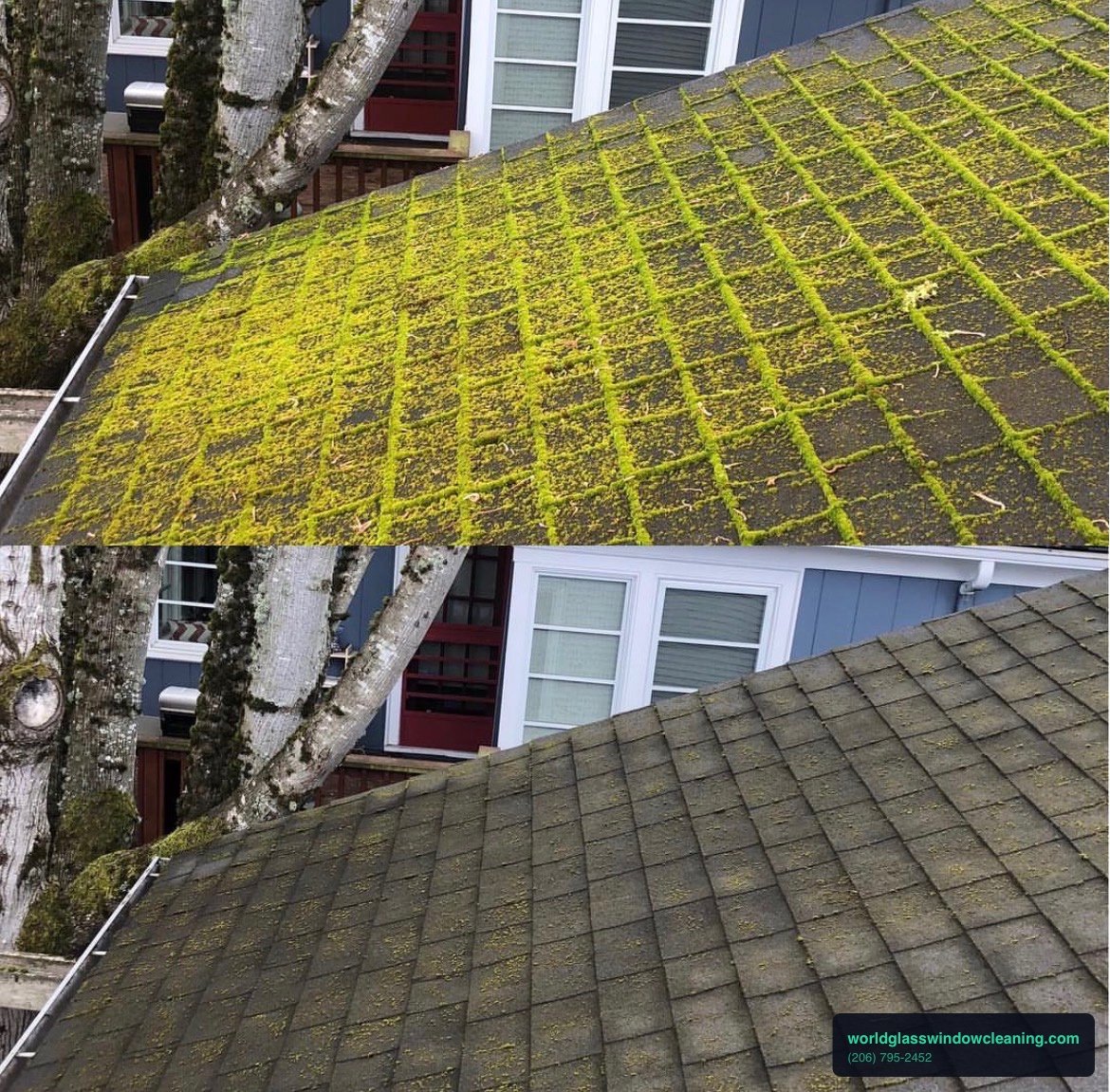
Roof cleaning and maintenance for fall isn’t about cosmetics. It’s about protecting a significant investment before months of heavy rainfall drive moisture under lifted shingles and compound the damage that moss has been quietly doing all year.
Why Fall Is the Right Time to Address Roof Moss in Ballard
Ballard’s tree canopy — a mix of mature conifers, maples, and alders — deposits a steady stream of organic debris onto roofs all year long. By the time September rolls around, that debris has had a full summer to trap moisture against shingles and feed existing moss colonies. Moss doesn’t just sit on a roof looking bad. Its root-like structures called rhizoids work their way under shingle edges, and when freeze-thaw cycles hit, that lifted material becomes a real liability.
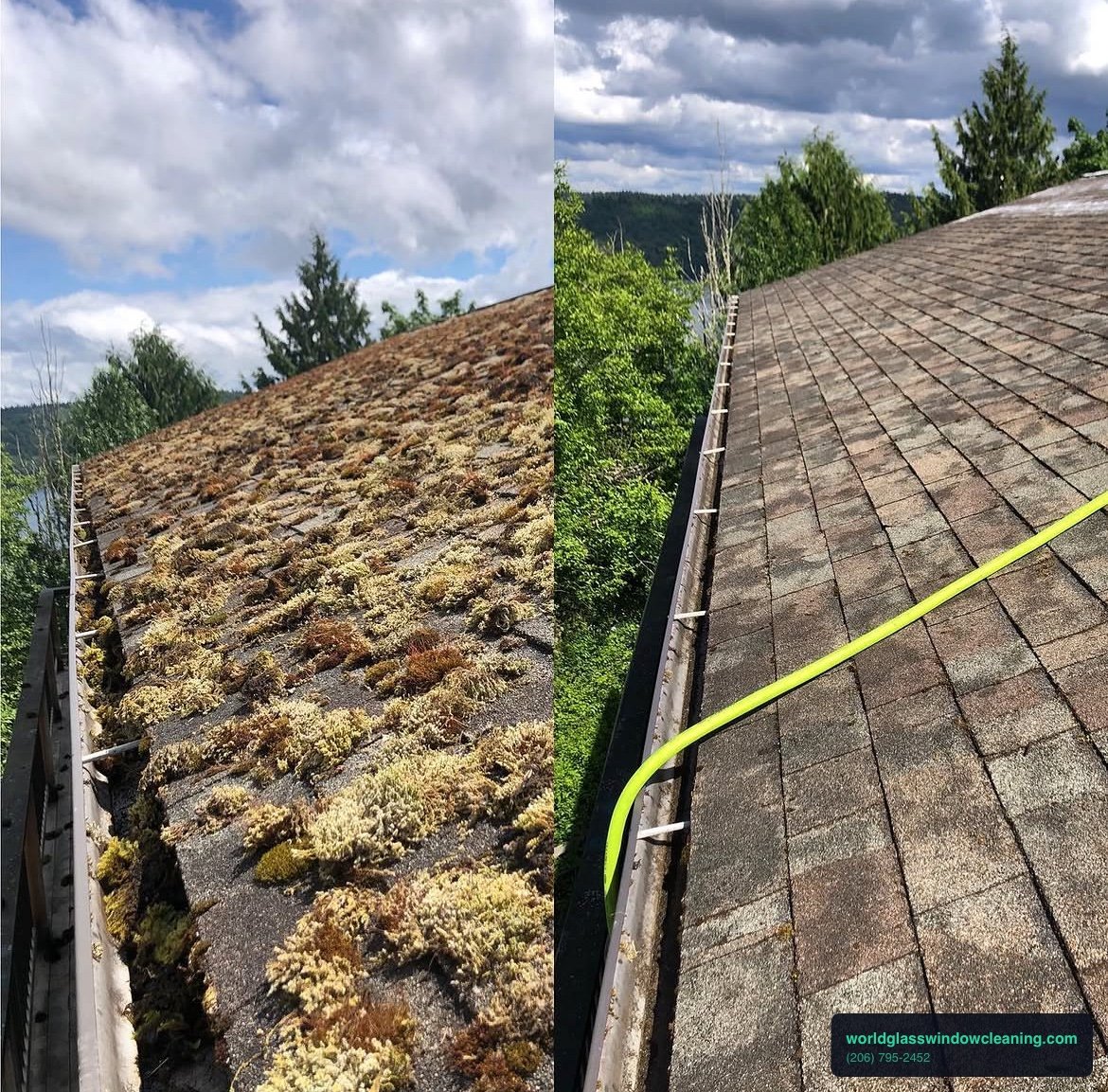
Getting a soft wash treatment done in fall means the active chemistry goes to work right as the rainy season begins. Rainfall becomes part of the process — over the next three to six months, it rinses away the dead organic growth that the sodium hypochlorite has already eliminated at the root. Timing the treatment to fall is deliberate, not arbitrary.
How I Actually Clean a Composite Roof — No Pressure Washer, No Guesswork
Roof soft wash on composite or asphalt shingles means one thing: low-pressure application of a proportioned sodium hypochlorite and surfactant solution. I never use a pressure washer on residential composite roofing. High-pressure washing blasts granules off shingles, accelerates wear, and in many cases voids the manufacturer warranty. There is no scenario where pressure washing a composite roof is the right call.
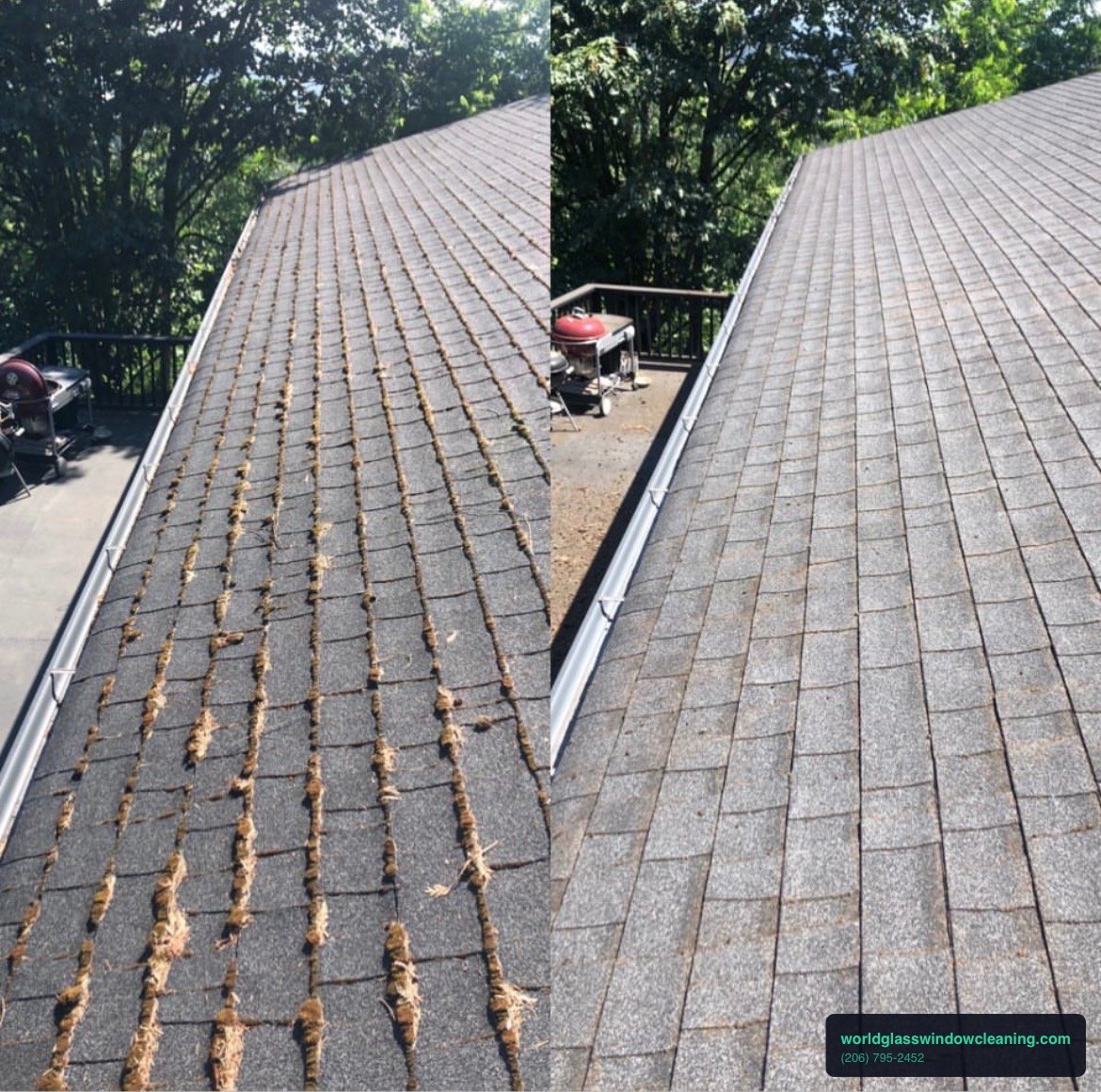
My process starts before any chemical touches the roof. I walk the perimeter and pre-soak all surrounding plants and landscaping with water — that dilution layer protects them from any overspray. I blow all debris off the roof and out of the gutters first, then use a soft brush to break up large moss clumps before a second blower pass clears the loosened material. Only then does chemistry go on.
I run a 12V soft wash rig with a proportioner system — precise concentration every single time, never batch-mixed by hand. The solution dwells on the roof surface and eliminates the biological growth without any mechanical impact to the shingles. On composite and asphalt, there’s no rinse step. The roof won’t look brand-new the same day — what you’ll see over the following months is the dead moss washing away naturally with each rain. That’s how the process is designed to work.
I also check every downspout before application. If one discharges to a garden bed or planting area, I bag it to catch the initial runoff and protect what’s growing there. Post-job, I do a second water pass on any plants that could have seen overspray, then blow the grounds clean.
Fall Maintenance Scheduling: What Pairs With a Roof Treatment
In 12 years of operating World Glass Window Cleaning — licensed WA L&I #WORLDGW748D6, insured, and surety bonded — the jobs I see go sideways are almost always ones where roof maintenance was deferred until something was visibly wrong. By then, the shingles are already compromised.
For most Ballard homes with composite roofing, I recommend a soft wash roof treatment on a three-year cycle. Annually, I offer a zinc monohydrate treatment that inhibits future moss and organic regrowth — it pairs naturally with a gutter cleaning visit, since debris loosened during roof work has a way of settling into gutters. Doing both in the same fall window makes sense operationally and protects the drainage system going into the wet months.
Roof maintenance for fall in a neighborhood like Ballard isn’t a one-and-done task. The conditions that grow moss here — shade, moisture, organic debris load — don’t change. But a consistent treatment schedule keeps it manageable and keeps your shingles intact for the full life of the roof.
What to Expect After a Soft Wash Treatment
I want to be straightforward about results, because this is where soft wash roof cleaning sometimes confuses homeowners: the roof will not look visibly clean the same day on composite or asphalt. That’s not how the chemistry works, and anyone who tells you otherwise is either pressure washing (damaging your shingles) or overpromising.
What actually happens: the sodium hypochlorite solution kills the moss, algae, and biological growth at the root level. Over the next three to six months, Seattle’s rainfall does the rinsing. The dead material washes away progressively, and by spring you’ll have a noticeably cleaner roof. That’s the legitimate, manufacturer-safe result of a proper soft wash treatment. The process works — it just works on a timeline that matches the biology, not an immediate before-and-after photo.
For Ballard homeowners evaluating whether now is the right time: if you’re seeing green or black streaking, moss buildup along the ridge or in the valleys, or lifted shingle edges, fall is exactly when to schedule this. Getting the treatment on before heavy rain is locked in gives the solution the best possible dwell conditions and starts the clock on the cleanup cycle that rainfall will complete.
Frequently Asked Questions
Will my roof look clean right after the soft wash is done?
Not on composite or asphalt — and that’s by design. The sodium hypochlorite solution kills the biological growth, but the dead material washes away naturally over three to six months of rainfall. You won’t see an instant transformation, but you will see progressive improvement through the winter and into spring. Anyone offering same-day results on a composite roof without a pressure washer is exaggerating.
Is fall really better than spring for roof moss treatment in Ballard?
Fall has a real advantage: you’re treating the roof right as the wet season starts, so Seattle’s rainfall actively assists the cleanup process over the following months. Spring treatment works too, but you lose that rainfall assist during the drier summer months. For Ballard homes with significant moss load coming out of summer, fall is the better window.
What about my gutters — do I need to deal with those at the same time?
Yes, and this is worth planning for. Debris that gets loosened during roof work tends to work its way into gutters. I always blow the roof and gutters before applying chemistry, but pairing a roof soft wash with a gutter cleaning in the same fall visit ensures your drainage system is fully cleared heading into the rainy season. I offer both, and it’s a natural combination for fall maintenance.
Ready to schedule fall roof maintenance for your Ballard home? I offer free estimates custom-quoted to your roof — call me directly at (206) 795-2452 or visit the Ballard service page to learn more about what I cover in the area. You can also see the full list of exterior cleaning services I offer throughout Seattle.