
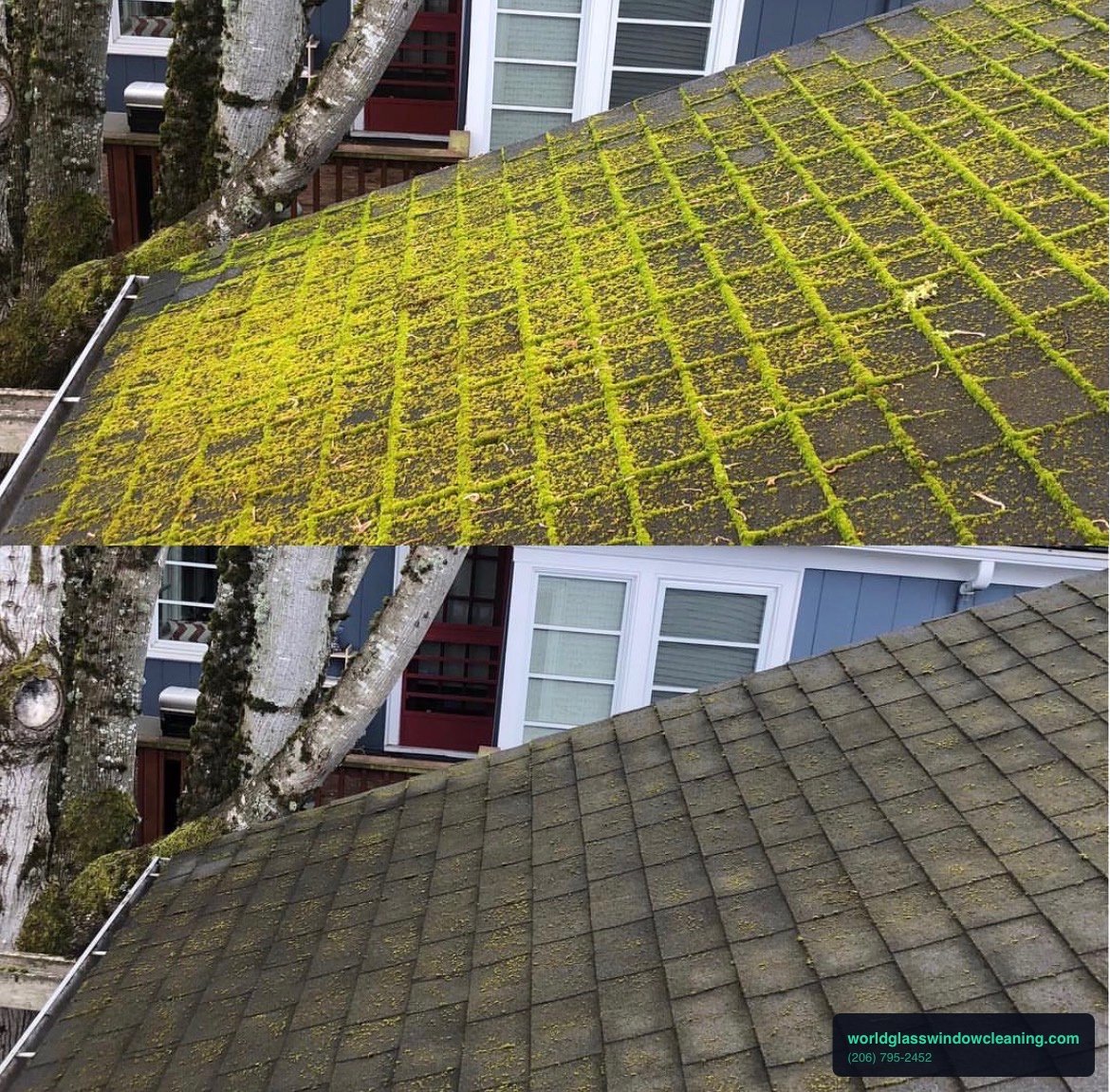
When Mercer Island homeowners ask what does soft washing Mercer Island roofs accomplish, they’re usually looking at moss-covered shingles and wondering if there’s a safe alternative to pressure washing. After 12 years of cleaning roofs across Seattle, I can tell you that soft washing is the only method I trust on composite and asphalt shingles.
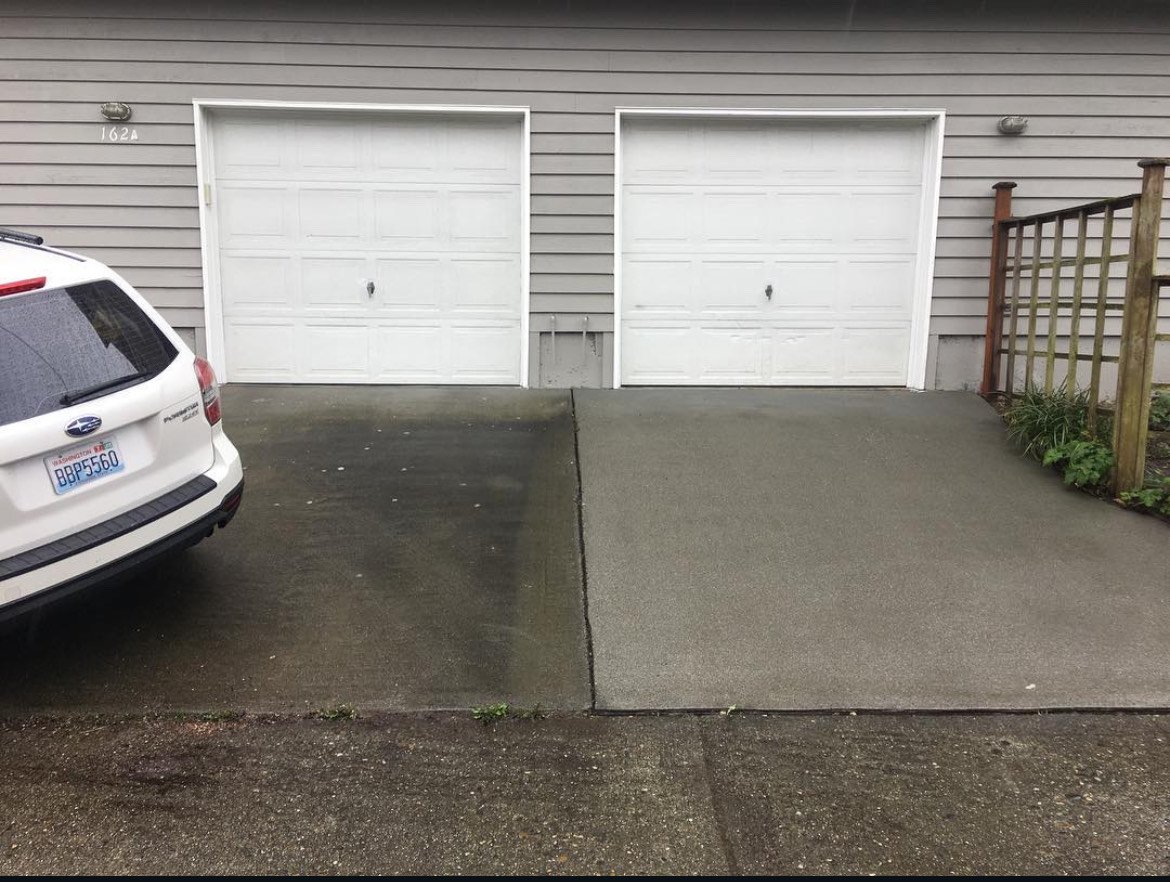
The process uses a 12V soft wash rig to apply sodium hypochlorite and surfactant at low pressure — around 100 PSI compared to the 3,000+ PSI of pressure washing. This kills moss and algae at the root level without blasting granules off your shingles or voiding manufacturer warranties.
The Real Process Behind Soft Washing
Understanding what does soft washing Mercer Island roofs involve starts with recognizing it’s a chemical treatment, not mechanical removal. I begin every roof soft wash job by walking the property to assess roof material and plan the safest access route.
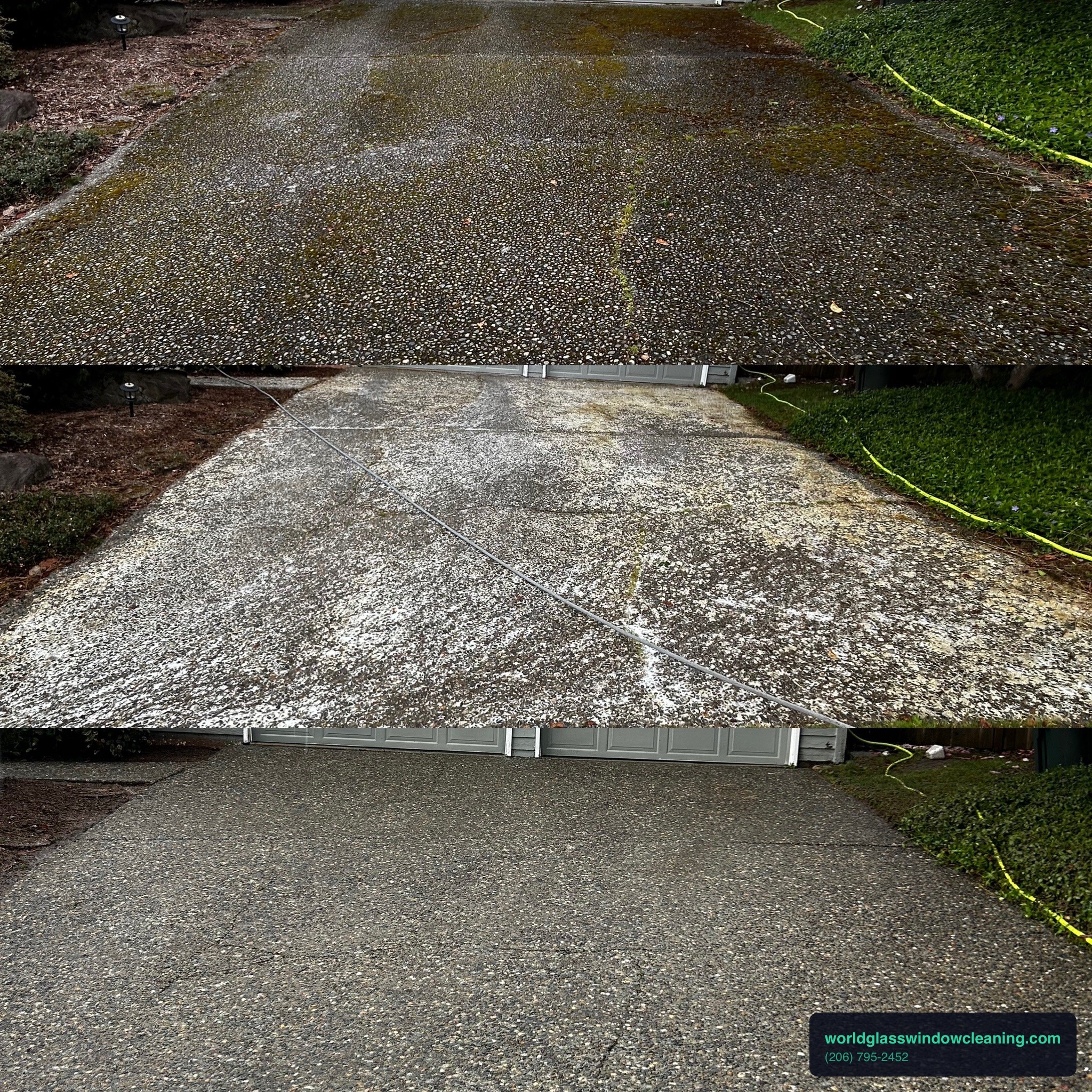
Plant protection comes first. I pre-soak all landscaping around the home with water — this dilutes any potential overspray before chemicals ever touch the roof. Then I blow the roof clean of all debris, paying special attention to gutters that might need professional cleaning after the process.
The actual chemical application uses my proportioner system to mix exact concentrations every time. No batch mixing, no guesswork. I spray toward the roof at edges to control where the sodium hypochlorite lands, let it dwell on the surface, then protect plants again with a second water rinse.
Why Mercer Island Roofs Need This Approach
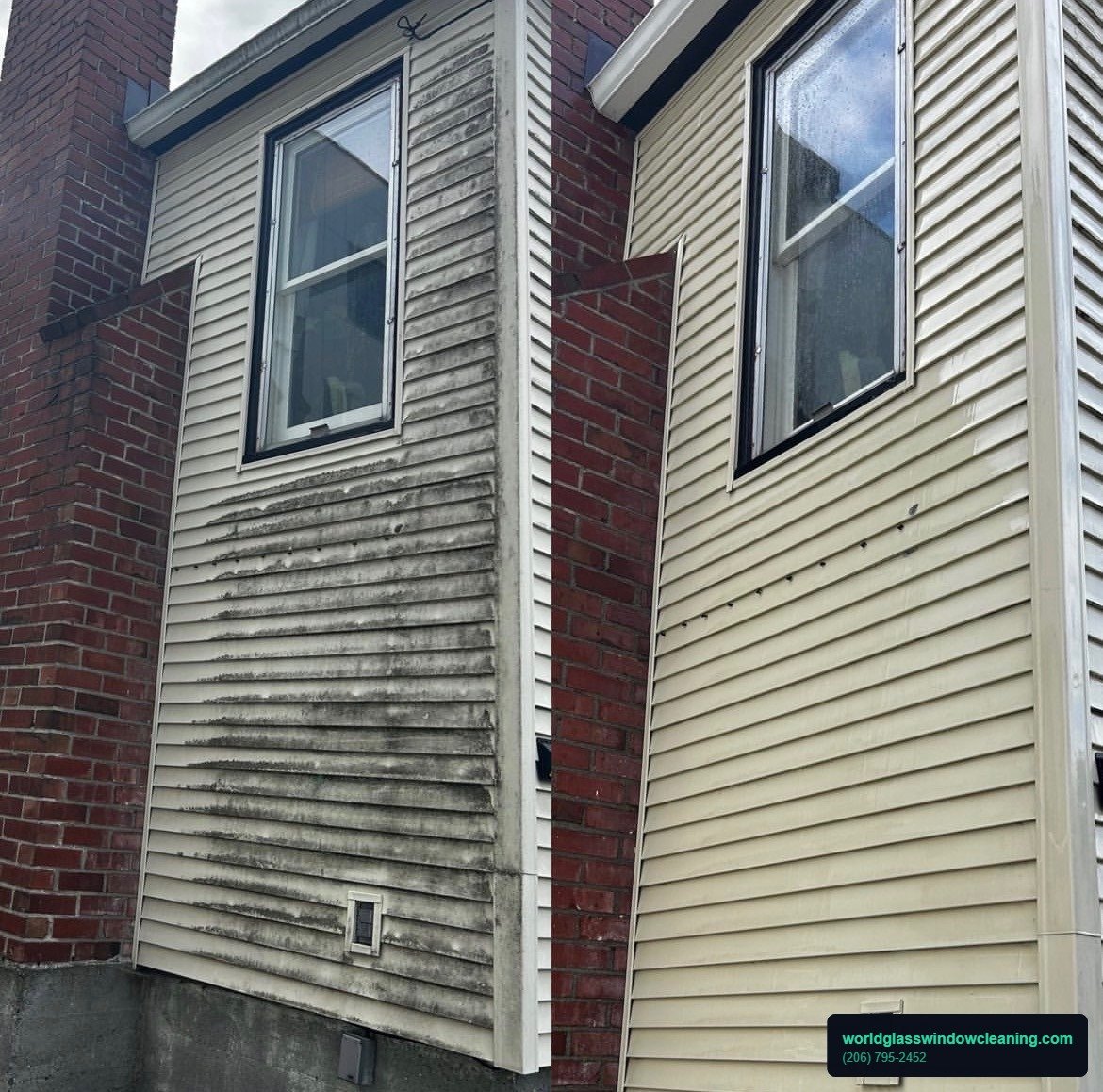
The Pacific Northwest climate creates perfect conditions for moss growth, and Mercer Island properties sit right in the middle of it. The combination of maritime humidity and our evergreen canopy means composite roofs here collect organic debris that feeds moss colonies year-round.
What does soft washing Mercer Island accomplish that pressure washing can’t? It kills the entire moss organism instead of just scraping the surface. Pressure washing might make your roof look temporarily cleaner, but it damages shingles and leaves root systems intact. Within months, the moss regrows thicker than before.
Licensed WA L&I #WORLDGW748D6, I’ve seen too many roofs damaged by well-meaning contractors with pressure washers. Soft washing preserves your investment while delivering lasting results.
Timeline and Results You Can Expect
Here’s what homeowners need to understand about soft washing results: they unfold naturally over 3-6 months. The chemical treatment kills moss immediately, but the dead growth washes off gradually through Seattle’s winter and spring rainfall.
This timeline surprises some people who expect instant visual transformation. What does soft washing Mercer Island provide instead is thorough elimination that prevents regrowth for years. The moss dies at the root, turns brown, then naturally detaches during rain events.
I recommend soft wash treatment every three years for composite roofs. Between treatments, I offer zinc monohydrate application as an annual maintenance step — this inhibits new moss formation and extends the time between full treatments.
Safety and Equipment Standards
Professional soft washing requires specific equipment and safety protocols. I use a 12V rig capable of 5 GPM at controlled pressure, with organic filter masks and goggles for chemical protection. When roof access requires it, I harness up — safety never gets compromised for speed.
The proportioner system ensures consistent chemical concentration across the entire roof surface. This matters because too weak means ineffective treatment, too strong risks plant damage or unnecessary chemical waste. After 12 years of perfecting this process, I know exactly what each roof type needs.
What does soft washing Mercer Island homes require beyond equipment? Understanding local conditions. The island’s mature tree coverage means I often deal with heavier debris loads and more complex drainage patterns around foundation plantings.